
Transcript
Announcer:
Welcome to CME on ReachMD. This activity is provided by Medcon International. This episode is part of our MinuteCE curriculum.
Prior to beginning the activity, please be sure to review the faculty and commercial support disclosure statements as well as the learning objectives.
Dr. Ray:
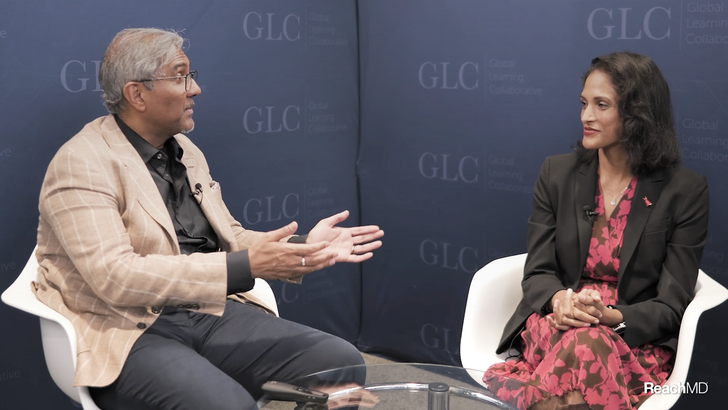
This is CME on PACE-CME and ReachMD. My name is Kausik Ray, and joining me today is my good friend and colleague, Pam Taub. Pam, welcome.
Dr. Taub:
Well, great to see you, Kosh.
Dr. Ray:
So, I'm going to get straight into some work here. I know there's a lot of exciting data that is upcoming and we've got some interesting trials that now may be getting us through to regulatory approvals, and this was all around triglycerides in different patient populations. There are those with genetic disorders like familial chylomicronemia syndrome, severe triglyceridemia, and the mixed hyperlipidemias. So, where are we? What are your thoughts, Pam?
Dr. Taub:
Well, I think first of all, it's really exciting that we're starting to talk about triglycerides because we've really been just focused on LDL. But we know that triglycerides really are an important factor in residual risk. And as you mentioned, there’s a wide spectrum of how patients present with elevated triglycerides. And sometimes it's very mild, they're in the 150 to 200 range, then we have a little bit more moderate elevation, I would say in the 500 to the 800 range, and then we have the very extreme cases where the triglycerides are over 1,000, and that tends to be our patients with FCS. And so those patients, we now have an FDA-approved therapy for. But for the patients where there's still an unmet need, or those patients with those triglycerides over 500 where there's still increased risk of pancreatitis. And so, there are now a lot more options that are being evaluated for those patients as well. But we still need to remember for those patients, that we need to have a holistic approach because it's not just about lowering the triglycerides, it's about optimizing their overall cardiometabolic health. So, we need to also focus on dietary changes that they can make. We need to also work with them on other aspects of metabolism. What is their blood sugar? Do they have diabetes? What is their weight? Can we optimize their weight through newer agents like GLP-1 receptor agonists? So, it's all of these things, in combination, that's going to not only lower triglycerides but also, overall, optimize them from a cardiometabolic perspective. And so, we do have some drugs that are FDA approved. We already have olezarsen for FCS, and then the next drug that's going to go into FDA review is plozasiran in the fall of 2025.
But in addition to that, what's really exciting is there is a plan for an outcome trial with plozasiran called the CAPITAN trial, which will really test this hypothesis of is triglyceride lowering, and lowering of remnant cholesterol, is that going to improve cardiovascular outcomes? And we have never really tested this hypothesis in this pure way, so I'm very excited about that. So, a lot of really exciting developments in the treatment of hypertriglyceridemia.
Dr. Ray:
Well, thanks for sharing those. It’s great for our patients that there are these therapies going through regulatory approvals both in Europe and North America. And ultimately, also being able to test whether we can improve cardiovascular outcome.
Thanks for a great discussion. One key take-home from you?
Dr. Taub:
I think we need to really focus on the holistic care of these patients because elevated triglycerides don't happen in isolation. It's usually in this very abnormal cardiometabolic milieu, and so we need to really optimize every aspect of their cardiometabolic health.
Dr. Ray:
And for me, I guess one of my final things is that, we have all these great treatments and we don't end up implementing them properly, so if these treatments become available, then the onus is on us about implementation, implementation, implementation. So, thank you very much. I hope the audience enjoyed the discussion.
Announcer:
You have been listening to CME on ReachMD. This activity is provided by Medcon International and is part of our MinuteCE curriculum.
To receive your free CME credit, or to download this activity, go to ReachMD.com/CME. Thank you for listening.

